Invocation Status System
The invocation status system is a core component of Pynenc that manages the lifecycle of task invocations through a declarative, type-safe state machine. This system provides ownership tracking, automatic recovery, and ensures reliable task execution in distributed environments.
Overview
Every task invocation in Pynenc progresses through a series of states from registration to completion. The status system enforces valid state transitions, tracks which runner owns each invocation, and enables automatic recovery when runners become unresponsive.
The diagram below is generated from pynenc/invocation/status.py. If a status or transition changes, pynenc status render --format svg --output docs/_static/invocation_state_machine.svg updates this SVG and the tests check that it stays aligned with the implementation.
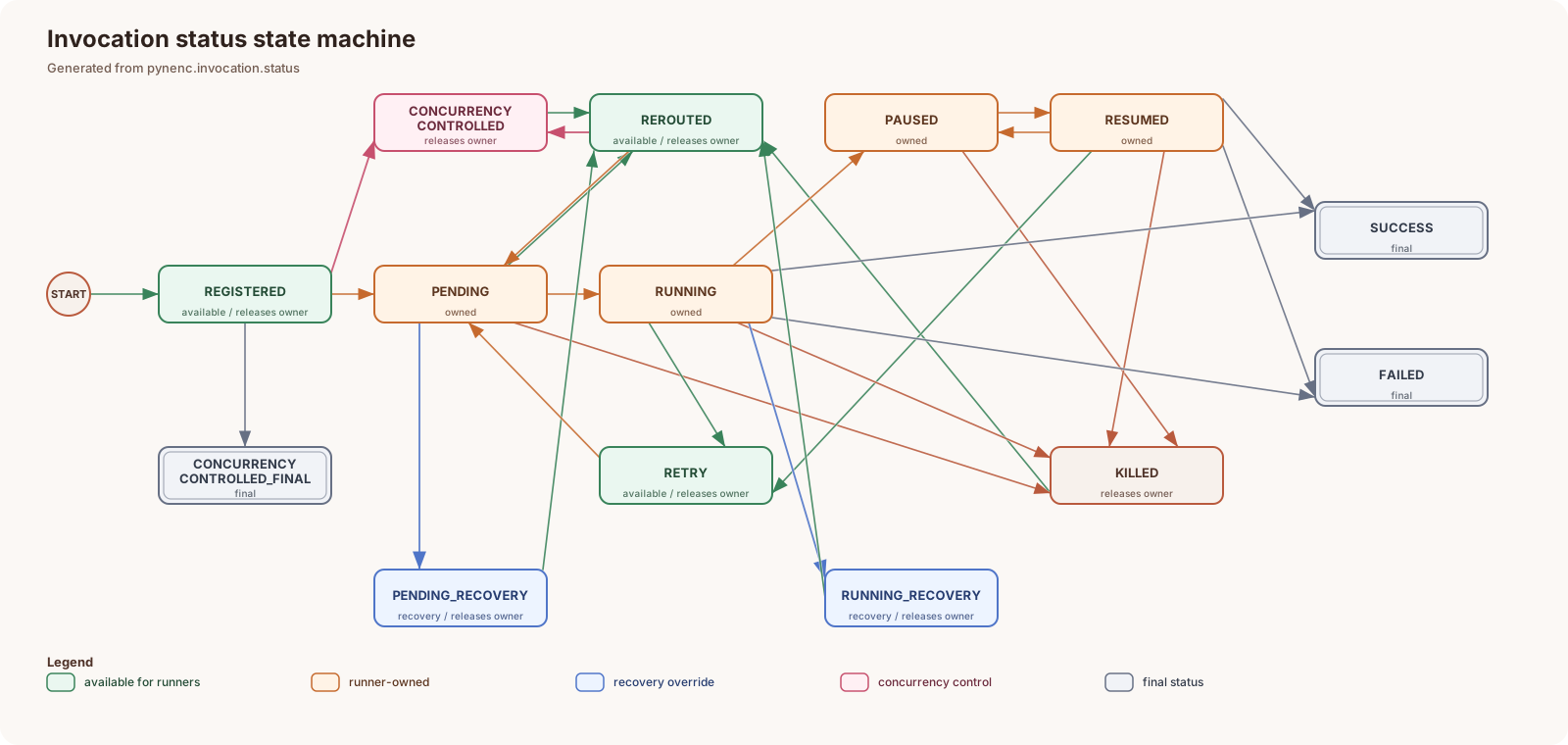
All Invocation Statuses
Status |
Description |
|---|---|
|
Task call has been routed and registered, available for runners to pick up |
|
Task was picked by a runner but not yet executed (owned by runner) |
|
Task is currently executing (owned by runner) |
|
Task execution is paused (owned by runner) |
|
Task execution was terminated and can be rerouted |
|
Task finished with a retriable exception, available for re-execution |
|
Task completed successfully (final) |
|
Task finished with an exception (final) |
|
Task has been re-routed for execution |
|
Task blocked by concurrency control, waiting for reroute |
|
Task permanently blocked by concurrency control (final) |
|
Recovering a PENDING task that exceeded timeout |
|
Recovering a RUNNING task whose runner became inactive |
Status Categories
Available for Run
These statuses indicate that an invocation is ready to be picked up by a runner:
Status |
Description |
|---|---|
|
Task call has been routed and registered in the system |
|
Task call has been re-routed after being released |
|
Task finished with a retriable exception and is ready for retry |
Owned by Runner
These statuses require ownership validation - only the owning runner can modify them:
Status |
Description |
|---|---|
|
Task was picked by a runner but not yet executing |
|
Task is currently being executed |
|
Task execution is paused (waiting for dependencies) |
Recovery Statuses
These statuses override ownership validation for recovering stuck invocations:
Status |
Description |
|---|---|
|
Invocation exceeded PENDING timeout, being recovered |
|
Invocation owned by inactive runner, being recovered |
Concurrency Control
These statuses handle concurrency control scenarios:
Status |
Description |
|---|---|
|
Task blocked by concurrency control, will be rerouted |
|
Task blocked and will not be rerouted (final) |
Final Statuses
These statuses terminate the invocation lifecycle:
Status |
Description |
|---|---|
|
Task completed without errors |
|
Task completed with an exception |
|
Task permanently blocked by concurrency control |
Ownership Model
The status system tracks which runner owns each invocation:
Ownership Acquisition: When a runner picks up an invocation (REGISTERED → PENDING), it acquires ownership.
Ownership Validation: Transitions from owned statuses (PENDING, RUNNING, etc.) require the requesting runner to be the owner.
Ownership Release: Statuses such as
REROUTED,RETRY,KILLED, recovery states, and final states release ownership before the next transition.Ownership Override: Recovery statuses (PENDING_RECOVERY, RUNNING_RECOVERY) bypass ownership validation to recover stuck invocations.
Runner Heartbeat and Recovery
Pynenc includes automatic recovery mechanisms for handling stuck invocations:
PENDING Recovery
When an invocation remains in PENDING status longer than max_pending_seconds, the recovery service:
Detects the timeout
Transitions to PENDING_RECOVERY (overrides ownership)
Reroutes the invocation for pickup by another runner
RUNNING Recovery
When a runner becomes inactive (stops sending heartbeats), the recovery service:
Detects the inactive runner via heartbeat monitoring
Finds all RUNNING invocations owned by that runner
Transitions to RUNNING_RECOVERY (overrides ownership)
Reroutes the invocations for pickup by active runners
Configuration
Control recovery behavior through configuration:
from pynenc.builder import PynencBuilder

app = (
    PynencBuilder()
    .app_id("my_app")
    .max_pending_seconds(300)  # 5 minutes before PENDING recovery
    .build()
)
Concurrency Control Integration
The status system integrates with concurrency control to prevent task saturation:
from pynenc import Pynenc, ConcurrencyControlType

app = Pynenc()

@app.task(
    running_concurrency=ConcurrencyControlType.TASK,
    reroute_on_concurrency_control=False  # Use CONCURRENCY_CONTROLLED_FINAL
)
def exclusive_task() -> str:
    return "Only one instance at a time"
When reroute_on_concurrency_control=False, blocked invocations receive CONCURRENCY_CONTROLLED_FINAL status instead of being rerouted, preventing unbounded task accumulation.
Monitoring Status
Use Pynmon to visualize invocation status transitions:
Start the monitor:
pynenc monitorwhen the app can be discovered, orpynenc --app your_app monitorwhen you need to select one explicitlyNavigate to the Timeline view to see status changes over time
Click on individual invocations to see their full status history
The timeline visualization shows:
Status transitions with timestamps
Runner ownership changes
Recovery events
Final status outcomes